TCSTraction Control System
Reduces wheel spin during acceleration by coordinating brake torque and engine power.
Standards
- ISO 26262 development path
- ABS-based architecture
- ESC-ready integration
- Powertrain CAN interface
System overview
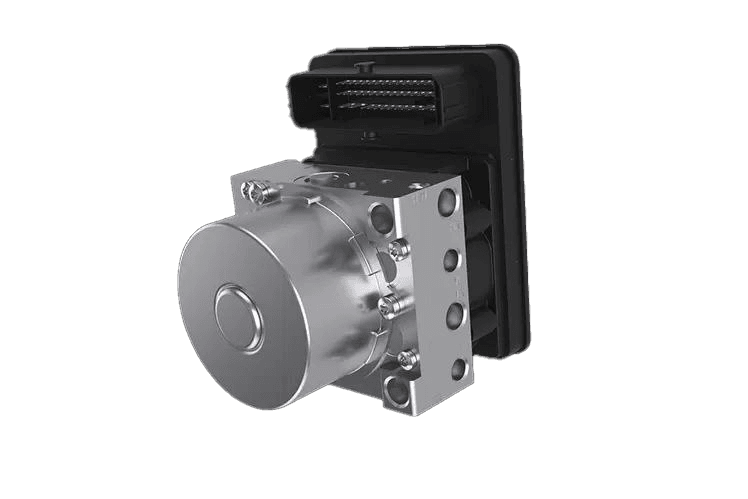
Traction Control Systems (TCS, also known as ASR or DTC) are built on top of ABS and prevent tire slippage during acceleration. When one wheel is stuck in a low-friction environment such as snow, ice, or mud, the system lets the other wheel drive the vehicle out of the situation. This is achieved by applying braking torque to the spinning wheel or by reducing engine power, keeping the vehicle stable and controllable as it launches and accelerates.
Brake-torque and engine-power intervention on spinning wheels
Low-friction launch support on snow, ice, and mud
Built on the existing ABS hardware base
Foundation function for full ESC stability control
Technical profile
Capabilities and technical values are program-dependent and must be confirmed against the applicable OEM requirements, vehicle architecture and validation plan.
Problems it solves
- Solves wheel spin and traction loss during hard or slippery acceleration.
- Frees a stuck vehicle when only one wheel has grip.
- Coordinates braking and engine torque to keep the launch controllable.
Typical applications
- Passenger vehicles driven on snow, ice, or loose surfaces.
- Higher-power platforms prone to wheel spin at launch.
- Programs building an ABS/TCS/ESC dynamics stack.
Technical profile
- Intervention
- Wheel braking torque and engine power reduction
- Inputs
- Wheel-speed sensors and powertrain torque data
- Base
- Installed on the ABS hydraulic control unit
- Variants
- Marketed as TCS, ASR, or DTC by different OEMs
Partner with ATI
Bring this system to your platform
Our engineering team supports integration, calibration and validation — from prototype to series production.
Products
Explore other ATI products
A connected portfolio of vehicle motion and control systems.