EBDElectronic Brakeforce Distribution
Distributes braking force dynamically according to load, grip, and wheel conditions.
Standards
- ISO 26262 development path
- ECE R13-H aligned
- ABS/EBD stack
- Sensor-fusion calibrated
System overview
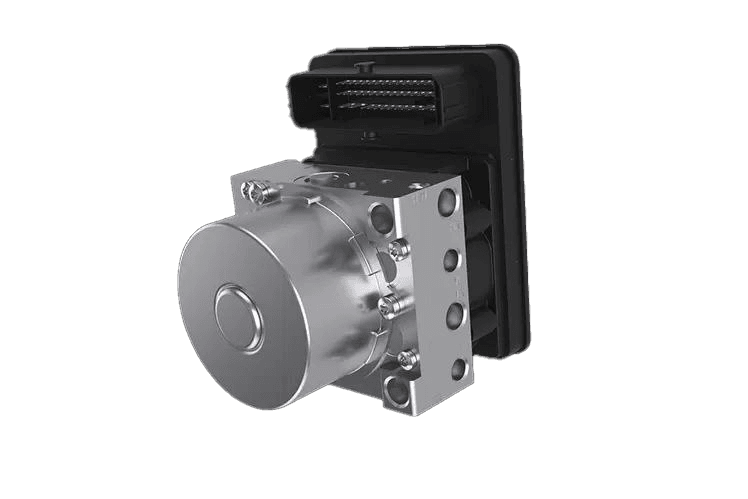
Electronic Brakeforce Distribution (EBD) is a subsystem of ABS that dynamically adjusts the braking force applied to each wheel based on vehicle load, road conditions, and wheel grip levels. Unlike traditional systems that apply equal force to all wheels, EBD sends more braking force to wheels with better traction and less to wheels at risk of locking, ensuring optimal stopping power while preventing skidding or loss of control. Working together with ABS, it continuously redistributes force in real time using wheel-speed and, where available, load sensors analysed by the ECU.
Load-aware force allocation between front and rear axles
Real-time adaptation to grip loss and slippery surfaces
Coordinated with ABS pulsing for maximum stability
Shorter stopping distance without added hardware
Technical profile
Capabilities and technical values are program-dependent and must be confirmed against the applicable OEM requirements, vehicle architecture and validation plan.
Problems it solves
- Solves rear-wheel over-braking when load shifts under passengers or cargo.
- Reduces skidding risk by matching brake force to each wheel’s available grip.
- Improves brake wear balance and traction on uneven surfaces.
Typical applications
- Passenger cars with variable occupant and luggage loading.
- Light commercial vehicles where payload changes brake balance.
- ABS-equipped platforms needing optimized front-to-rear force split.
Technical profile
- Function
- Dynamic per-wheel brakeforce allocation
- Inputs
- Wheel speed, slip estimation, and optional load sensors
- Integration
- Operates within the ABS hydraulic control unit
- Benefit
- Shorter stops, better stability, and reduced brake wear
Partner with ATI
Bring this system to your platform
Our engineering team supports integration, calibration and validation — from prototype to series production.
Products
Explore other ATI products
A connected portfolio of vehicle motion and control systems.